
Understanding addiction
Why can't I stop?
Or the willpower myth. "You just have to really want it." Millions of people have heard that line, and it lands like a second sentence on top of the first.

Or the willpower myth…
"You just have to really want it." Millions of people have heard that line, and it lands like a second sentence on top of the first. As though failing to stop revealed a flaw of character, a weakness. Whereas willpower has very little to do with it. Here are a few basic truths about what actually holds an addiction in place.
Addiction is run by unconscious machinery
The unconscious runs a whole range of survival mechanisms without us ever having to think about them:
- breathing
- heartbeat
- keeping our temperature steady
- digestion, and so on
Addiction works on the same principle. It is not a conscious choice renewed every morning — it is an automatic programme, installed deep down, and willpower alone cannot uninstall it. If the unconscious has decided that a given behaviour is still necessary, even vital, to how we function, willpower gets swept aside fairly quickly: the addiction is answering needs the unconscious may well class as vital.
Addiction answers fundamental needs
A client recently told me about a first laser cessation session. The practitioner asked him to hand over his packet, and it put him instantly on the defensive. Why? Because that packet was tied to a vital need — winding down, being able to handle serious stress. If an addictive habit stays in place, it is because it is trying to answer one or more specific needs that have to be identified: relaxation, calm, relief, pleasure, energy, adventure, retreating into your own bubble, switching the brain off, handling certain emotions. Its way of answering them is of course very imperfect. But if it is still there, it means two things:
- first, its function or functions must have worked for a certain amount of time
- second, the mind has not yet found another accessible way of generating those states, or of handling those emotions, with the same efficiency
So for as long as those needs go unrecognised and unaddressed by healthier strategies, the addictive behaviour stays the solution our unconscious and our nervous system reach for first.
Willpower is a limited resource, and usually an over-taxed one
Think of willpower (or self-control) as a battery that drains across the day, every time you make a conscious effort. A few things that draw on that reserve:
- looking after other people (children, family, patients, and so on)
- handling something unexpected, or a crisis
- saying "yes" while everything inside says "no"
- keeping up a situation that deep down does not suit you
- holding back emotions that want to spill over
- meeting social or professional expectations that no longer fit you
- putting up with a colleague's or a manager's mood, or their bad jokes
- and then there is the pull of friends and family using around you
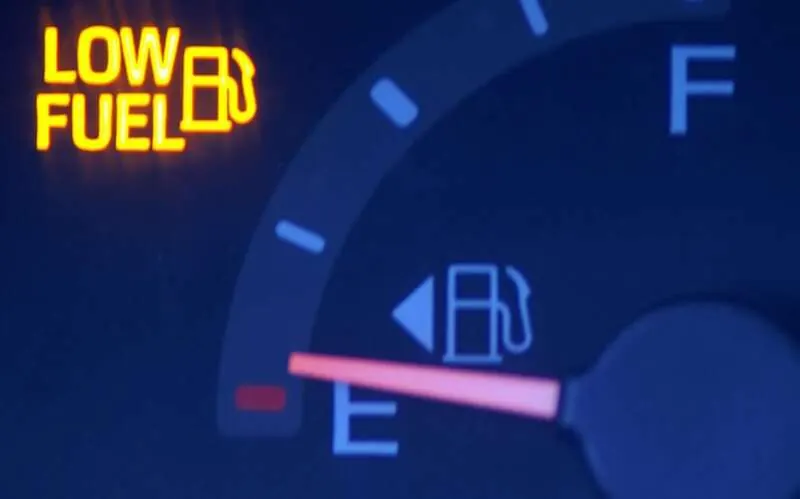
That is part of why so much addictive behaviour happens in the evening and at weekends. Tiredness sets in, and you look for a reward, a lift, something to revive a willpower that is flat. It is not unusual for the addiction to serve mainly as a way of getting energy back. Which is exactly why you cannot count on willpower alone to leave one behind.
Abstinent versus free
Why do some people count the days, even years after they stopped? Do you stay an addict for life? Plenty of people will tell you yes. Why? Because they have not fully broken with their addiction. In Libérez-vous de votre addiction, Fabien Olicard draws a line between the abstinent and the freed. The abstinent no longer uses, but is still fighting — counting the days, avoiding certain situations, still defined by what they no longer do. The freed person has no inner battle left.
What separates the abstinent from the freed
What makes the difference between someone for whom the addiction is a non-issue, someone counting the days, and someone who goes back to it? Quite simply whether the addiction has been properly replaced. Otherwise there is a gap. And the mind cannot stand a gap. So it sets about filling it.
And if no new ways have been consciously chosen — inside and out: new emotional resources, new strategies, preparation for the situations that put you at risk — that gap stays open and creates a permanent inner struggle. Getting out of an addiction is not a matter of trying harder. It comes from understanding what exactly the addiction is trying to solve, and from finding ways to replace it that are alive and worth having.
A first assessment
Tired of going it alone?
A 45-minute conversation, free and with no commitment.

- 01Understand the mechanics behind your addiction
- 02Identify what stands between you and the way out
- 03Decide together whether this support fits you