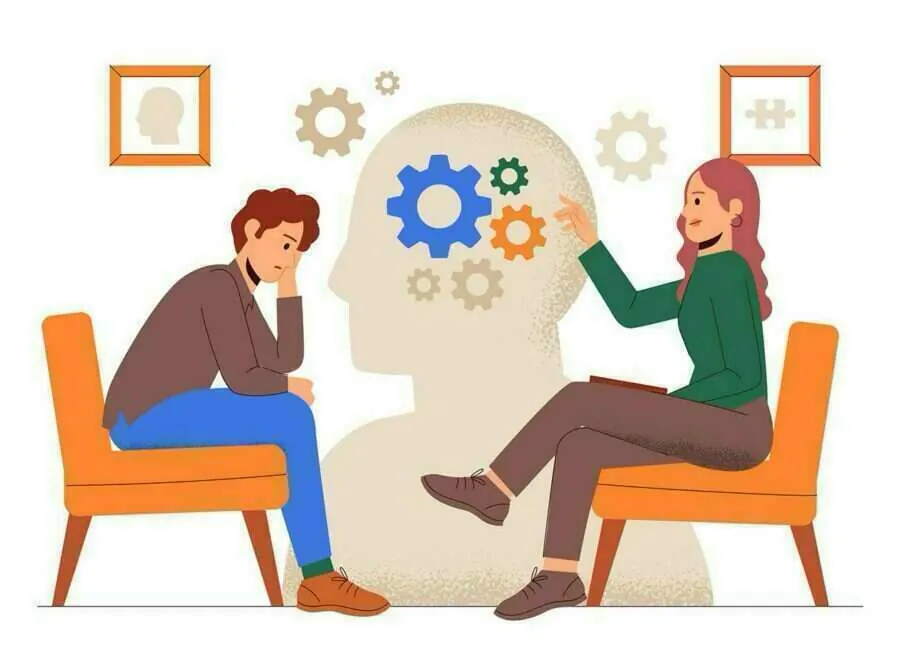
Constant discomfort
A tight chest, stress, a knot in the stomach, anxiety.

I work with people the usual approaches have not helped — with a method that outmanoeuvres the mechanics of addiction by answering the underlying needs another way.

4.9 / 5
98 Google reviews
3 to 12 weeks
To get free for good
32 years
Of first-hand experience with addiction
45 min
Free assessment, no commitment
On one side, there is the fear of what life will be without it — boredom, emptiness, moods. On the other, some of the pillars of your life are at risk: health, work, your relationship, family, social life. And underneath, the feeling that something is beyond you, even though you are free and independent everywhere else.
Does this sound familiar? Take the test →A tight chest, stress, a knot in the stomach, anxiety.
Feeling free, confident, alive — but only for a moment.
Your brain struggles to stop. The addiction is what quietens it.
A bubble that isolates, and a sense of emptiness.
The addiction brings more shame, more guilt and more self-criticism.
The creative spark seems to switch on only alongside the addiction.
Stopping through sheer willpower

Following treatment in psychiatry or addiction medicine

Testing alternative methods: laser, hypnosis, EMDR
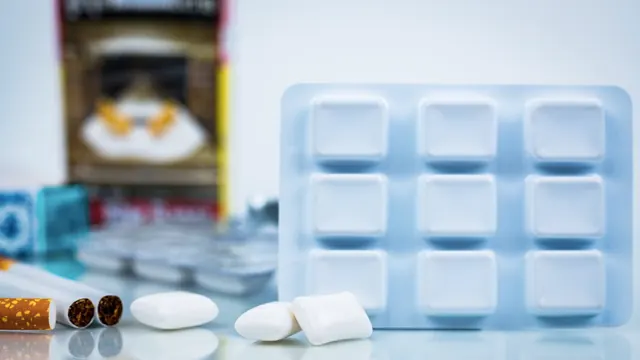
Replacing it with substitution products

Joining a support group or a community

Going through one or more residential programmes
Why it did not hold
These approaches deal with addiction at the surface, leaving the mechanics that keep it alive untouched: the needs and effects you are after, the emotions that block you, the situations that put you at risk. Hence the systematic relapses, or the shift to something else.
An addiction fills a gap that keeps widening for as long as you do not learn to look at it and fill it consciously.
Read “Addiction as a messenger” →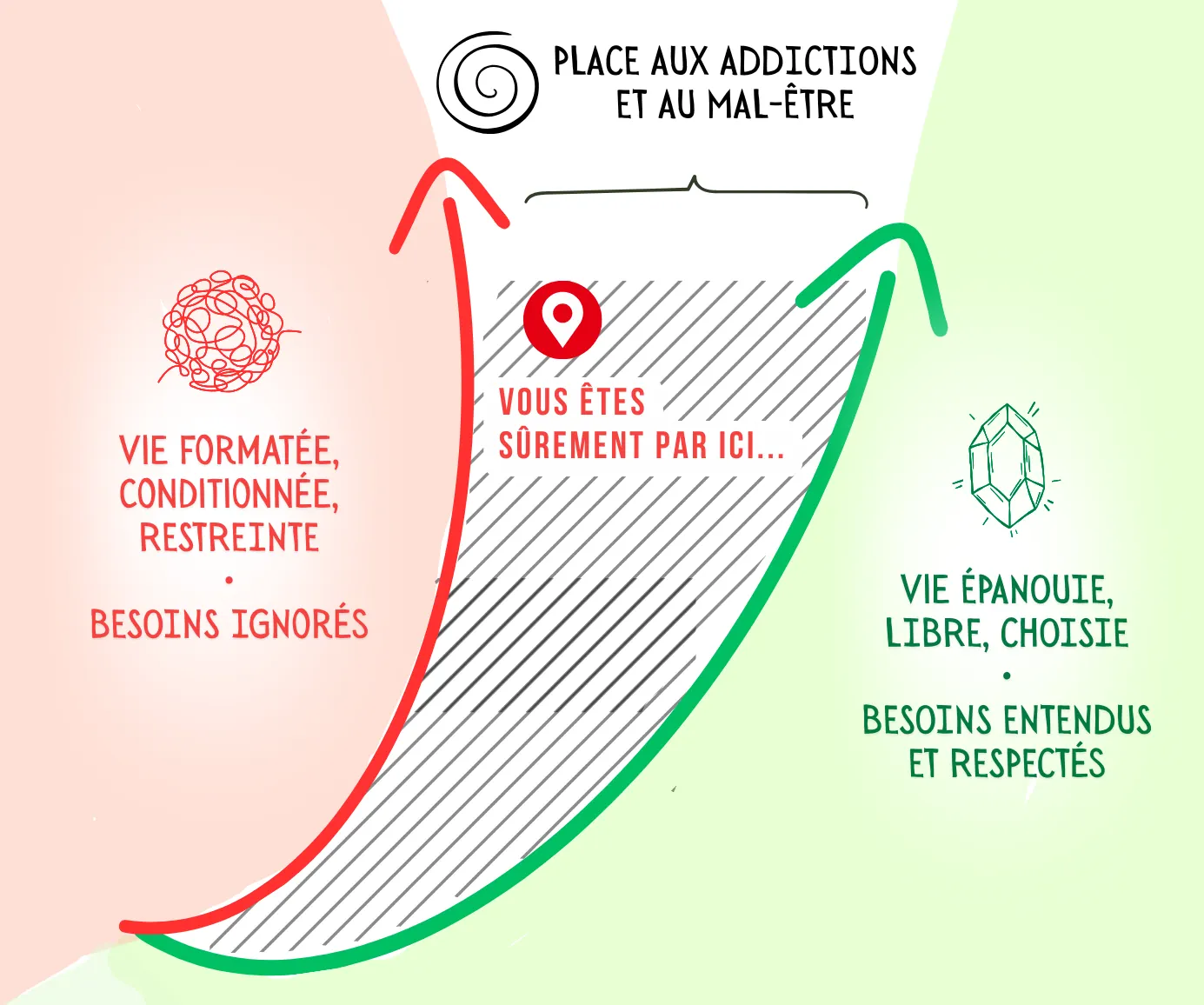
Work out which needs the addiction is trying to meet, and what is blocking natural access to those states.
Learn to generate those states from the inside through interactive hypnosis, so the addiction is no longer the supplier.
Anxiety, trauma and self-criticism are eased with interactive hypnosis and the tools built into it: NLP, sophrology, mindfulness.
The addiction is replaced for good by habits you have chosen, and risky situations are handled with new strategies.
The test
A dozen questions, with no judgement, to see a little more clearly whether your habit is in fact an addiction. If questions or realisations come up at the end of it, consider booking a free assessment call.
This questionnaire gives you a first level of assessment to work out whether or not you are caught in an addiction.
For it to be useful, pick one specific habit (alcohol, sugar, screens, work, and so on) and keep that same one in mind for every question.
One important note: above all, make sure you also listen to your own sense of things, and to people close to you whom you trust. If you have the slightest doubt about your habit or your situation, do reach out to a professional.
Frequency : Has this consumption habit (sugar, tobacco, alcohol, drugs) or behaviour (sex, gambling) become a systematic ritual — daily, every evening, every weekend?
Impact : Have you already identified negative consequences of this habit in your life today?
You can pick several answers.
Failed attempts to stop : Have you already stopped for a few days, weeks or months without managing to make it last?
The emotional crutch : Would you say this habit helps you deal with stress, frustration, boredom or loneliness?
A state you are looking for : Would you say this habit makes you feel better overall, or brings you one or more particular states (calm, relief, energy, confidence, creativity, switching your mind off, and so on)?
Mental fog : Do you notice a general drop in your mental clarity or your creativity?
Permissive thoughts : Does your brain regularly build excuses to consume? (“I'll deal with it tomorrow”; “I've earned it”; “you only live once”; “you have to die of something”)
Secrecy : Do you feel the need to hide or play down this habit with your partner, your family or your friends?
Tiredness : Does the urge get stronger in the evening, or after a demanding day?
Apathy : Do your other interests feel less frequent, fewer, less interesting or less motivating than they used to?
Loss of control : Do you feel you are no longer fully in charge of this behaviour?
Desire returns on its own, and everything becomes easier to create.
You leave autopilot behind for habits that look like you.
Usually between €1,500 and €4,800 saved every year.
Break-ups avoided, children protected, conflict defused.
Emotions can be met and settled without a crutch.
Behaviour that matches your values, without the guilt.
Less worry about what is coming, and a sense of being alive.
Pleasure and wellbeing become allies again. One no longer costs the other.
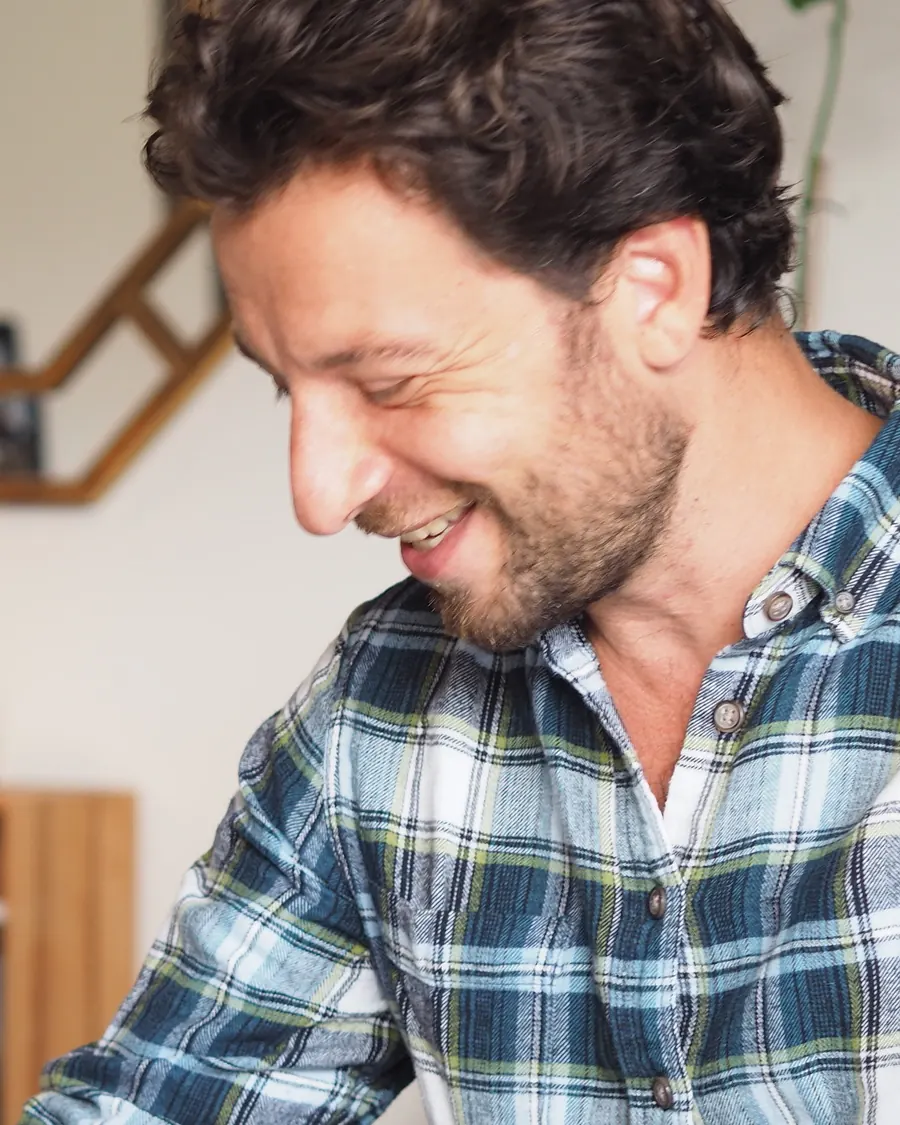
The therapist you will be working with
Bulimia, gambling, tobacco, cannabis, alcohol, cocaine. An older brother who died at 19, destroyed by his own addictions. By 2015 my life looked like a ruin: no sense of direction, several addictions, panic attacks, health problems, moving back in with my parents, depression.
In 2016 I left my business and trained as a professional coach, then in guided imagery, sophrology, NLP, CBT, nonviolent communication and mindfulness. I left my addictions behind one by one, from cocaine in 2016 to tobacco in 2019.
I went on to develop interactive hypnosis, along with a stripped-back form of coaching centred on fulfilment — methods I use every day and now teach to other therapists.
My story in full →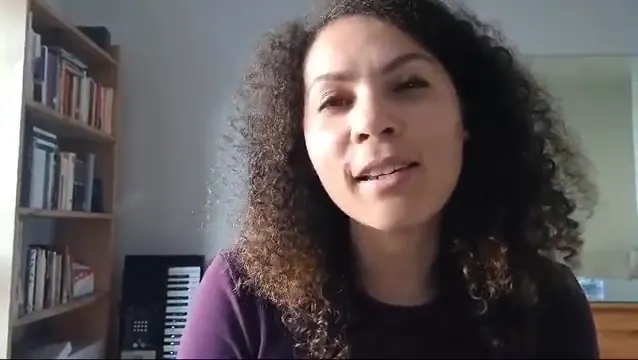
“I smoked from morning to night, permanently stressed. What caught my attention was the mix of coaching and hypnosis. I stopped quickly, then carried on to handle my emotions better. A few months later, a serious family crisis — and it never crossed my mind to smoke.”
“I had tried everything: rehab, therapy, medication. Without suffering, and almost imperceptibly, my drinking came down. Even after a relapse, he never stopped supporting me.”
“A completely different take on hypnosis. I was not convinced when I walked out, but since then: I sleep without medication, the addiction is gone, the grief has moved.”
Read the 98 Google reviews →“He guided me kindly back towards the sense of purpose I had lost, with hypnosis helping along the way. Together we did a phenomenal piece of work to reach my goal: stopping alcohol completely.”
Support & assessment

It depends on your history and on what the substance is doing for you. On average, a structured programme runs between 3 and 12 weeks, with sessions spaced out so the changes have time to settle. The free 45-minute assessment is there to sketch out a realistic path together.
The interactive hypnosis I use (different from classic Ericksonian hypnosis) lets you reach the states you drink for — relaxation, relief, a quiet mind, a sense of freedom — by another route. But the work does not stop at hypnosis. We build new strategies and new habits to replace the addiction, without ever writing off pleasure and enjoyment, then go through every risky situation one by one. It is that combination that has repeatedly proved itself against alcohol addiction. Medical follow-up may be suggested, but it is not always necessary.
Private coaching and hypnotherapy sessions are not reimbursed by Assurance maladie. Some French mutuelles do cover part of the cost under complementary medicine — worth checking your policy.
One thing to keep in mind: cost should not be your only criterion. Not getting free of an addiction usually costs between €1,500 and €4,800 a year, before counting everything else it affects — focus, wellbeing, relationships, family.
For 30 to 45 minutes, over the phone or by video, we map out how your addiction works: the emotional needs it meets and what is getting in the way of stopping. You leave with a clear picture of your situation and of the work we could do together. If you want to go ahead, we agree on a session rhythm and a first date. There is no obligation to continue.
Yes. Online support works very well and covers France and the rest of the world, with exactly the same method as in person.
Plenty of clients have left tobacco, alcohol or drugs behind through remote sessions, from Le Mans, Paris, Toulouse, Marseille, London, Madrid or Thailand.
Two conditions matter: a connection stable enough for a video call, and a quiet spot with as few interruptions as possible.
Yes. Sessions are available in English by video call wherever you live, and in person at the practice in Caen, Normandy. The free assessment call is the simplest way to check that we understand each other well enough to work together.
A first assessment