Standing still
Waiting for the trap to open by itself — often out of exhaustion after forcing it.

Approach
Not a flaw. Not a lack of intelligence. A warning light on the dashboard: something in the system of your life needs to be heard.

“An addiction is simply a habit with mostly negative consequences that seems difficult, if not impossible, to stop.”
Whether it involves substances (sugar, tobacco, alcohol) or behaviours (screens, emotional dependence, compulsive spending), a purely moral or purely medical reading misses the point: addiction signals a vital need going unmet.
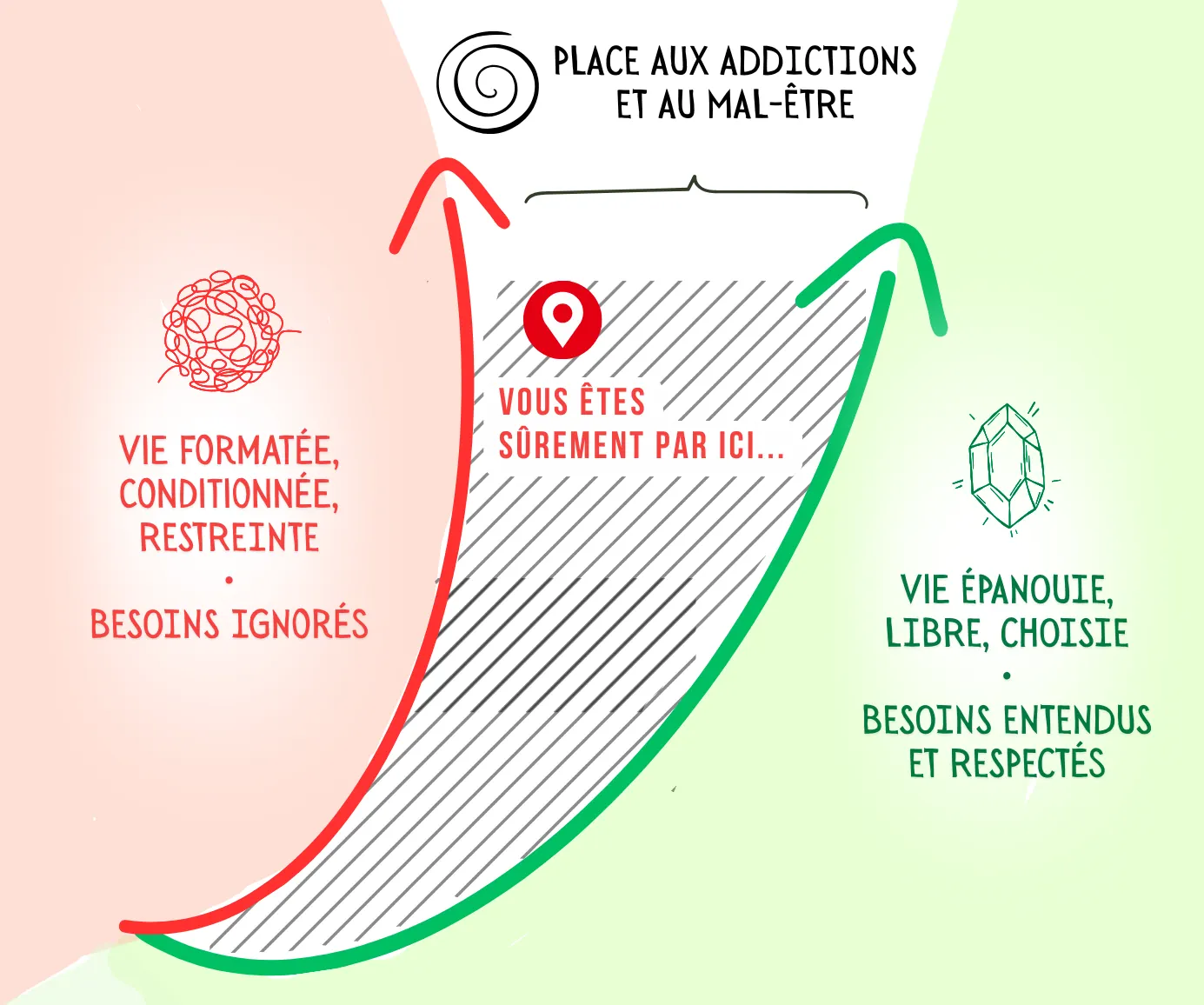
Faced with pain, there are four possible reactions.
Waiting for the trap to open by itself — often out of exhaustion after forcing it.
Looking for outside help — provided the tools are the right ones.
Thrashing about, at the risk of deeper wounds: discouragement, shame.
“Addiction is an attempt to solve a problem: the problem of emotional pain, of stress, of lost connection.” — Gabor Maté
As long as we have no other tools to soothe an emptiness or an anxiety, addiction remains the nervous system's default answer. In therapy the aim is not only to “stop”: it is to understand which vital need it is trying to meet — so that need can be answered another way, one that is natural enough to keep.
Viktor Frankl: between the signal (the urge) and the action, there is a space. The shorter that space, the more we act on reflex. The work consists of stretching it open with awareness — because that is where the power to choose differently sits.
My role is not to “save” you, which would only create a new dependence, but to fly alongside you while you learn to read your own instruments: emotions, needs, intuition.
See how the method applies →The logical next step
A 45-minute assessment to map out your mechanisms and see whether this support can help you — free, with no commitment.