Blog
Who is this blog for?
First and most obviously, for people living with an addiction. Also for parents and families trying to understand how it works, so they can find the right stance.
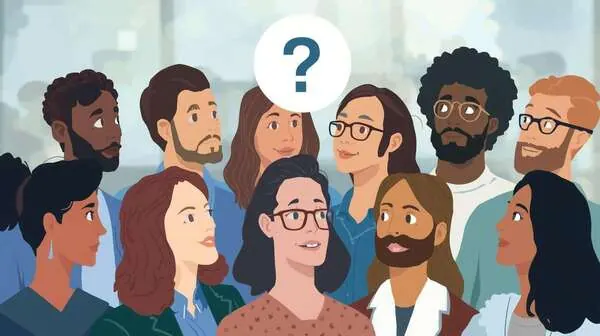
First and most obviously, this blog is for people living with an addiction.
It is also for parents and families trying to understand how these things work, so they can find the right stance in supporting someone they love.
But it is for anyone with tendencies that can be approached as addictions, even where they are neither seen nor classified as such.
Among those behaviours there are recognised psychological and medical conditions, such as:
- Obsessive thoughts: hypochondria, for instance (the fear of always being ill or of dying), or intrusive-thought phobias (the irrational fear of losing control and committing a serious or immoral act).
- Compulsions: compulsive buying, gambling disorder, kleptomania (a recurring, irresistible impulse to steal), pyromania, trichotillomania (pulling out your own hair), dermatillomania (excessive picking, scratching, pinching or rubbing of the skin), and so on.
- OCD: it matters to note that these disorders — cleaning, checking, hoarding, superstition and the rest — are particularly complex, and medicine classifies them separately from addiction. Having no identifiable experience of them myself, I hold back from folding them entirely into the field of addiction. But my working hypothesis here is that the compulsions of OCD, generally carried out to soothe a deep anxiety, bear troubling similarities to the mechanisms we are going to take apart — in their automatic quality, and in their frequently harmful consequences for the person and those around them. The aim is not to underestimate where these disorders come from, but to explore whether this approach, through the power of awareness, of felt sense and of understanding needs, can offer some additional light.
Then there are the far more normalised habits that nevertheless do real harm to us and to the people around us. For example:
- "I can't stop staying in this relationship, even though deep down I know perfectly well it is bad for me. It is stronger than I am, I go back every time, and the longer it lasts the more it hurts."
- "I can't stop cheating on my partner even though I love her deeply, and it makes me miserable, because the moment I see her I feel guilty, wretched, worthless."
- "I can't stop needling my daughter about her body and her weight, even though I can see it hurts her, that it pushes us apart and cuts us off from each other. It is stronger than I am and I regret it deeply without knowing what to do about it."
- "I know it is bad for the environment and the planet, but I can't stop buying plastic — and I feel awful when I see it in my drawers or my fridge."
- "I can't stop hoarding money and getting richer, and it hurts. I feel guilty about not being able to let go of it, when I have too much, even though it stops me contributing to causes in the world or to the people close to me."
And then there are the habits the law condemns, where again something seems stronger than the person — almost certainly something unconscious that needs identifying urgently. For example:
- "I can't stop losing my temper and hitting my son when I hear him talk a certain way. It is stronger than I am, even though it makes us both miserable and I am afraid he will go on to do the same with the people he loves."
- "I can't stop my sexual behaviour. Deep down I know it is unhealthy and that what I do puts me at serious risk, both for the wellbeing of those around me and legally, but it feels as though my desire has a degree of control over me and I have no idea how to get out."
All of these behaviours can be approached as addictions. Some of them are of course reprehensible, and sometimes serious — but it is precisely when we do not look at and understand their mechanics that the risk grows.
So this blog is for anyone with automatic or reflex behaviour — behaviour that looks uncontrollable, that we carry out in spite of ourselves without really choosing — with identified negative consequences for our wellbeing (health, relationships, how we organise our lives) or for the people around us.
Whether it is using a particular substance too often, or a compulsive or impulsive behaviour, all of it can be looked at and got past with the same approach we will go into here.
For simplicity's sake, we will call all these rituals and behaviours addictions. But before setting out to leave the substance or the behaviour behind, have a look at the reasons that might push you to get past an addiction in the first place — that is the subject of the piece "Why look for a way out of an addiction?"
A first assessment
Tired of going it alone?
A 45-minute conversation, free and with no commitment.

- 01Understand the mechanics behind your addiction
- 02Identify what stands between you and the way out
- 03Decide together whether this support fits you