

Understanding addiction
City addictions: understanding where they come from
City addictions are a way of regulating urban stress. We unpack these addictive behaviours to calm the body and heal.
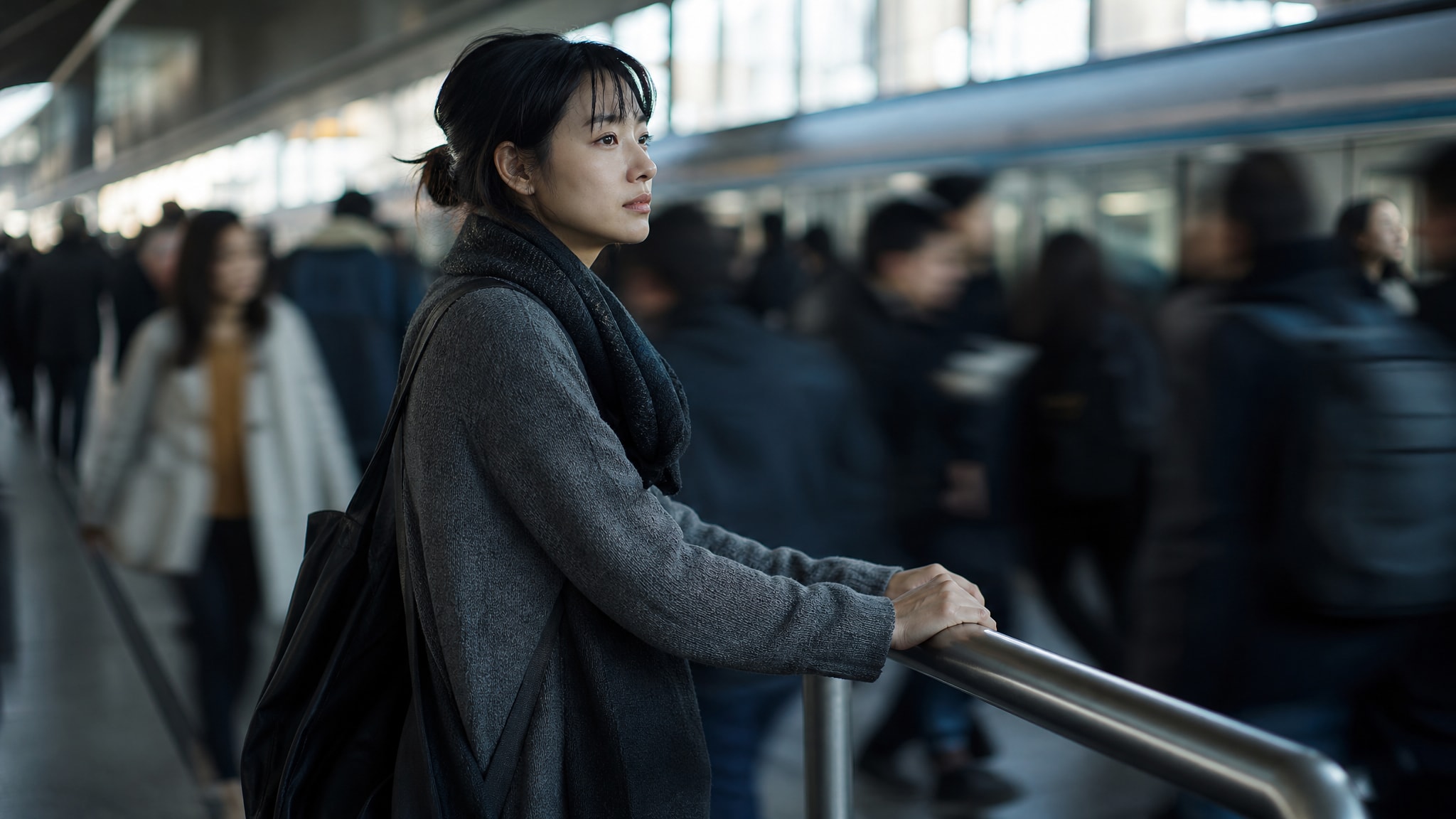
City addictions are not moral failures or weaknesses of character. They are attempts at regulation in the face of a saturated urban environment that demands constant adaptation. The term covers all the addictive behaviours that take root in the pace, density and tensions particular to big cities. The problem behaviour becomes a functional crutch for getting through daily life.
Key takeaways
- City addiction works as a mechanism of emotional regulation in the face of urban sensory overload, rather than as a simple failure of willpower.
- The distinction between recreational use and addictive behaviour rests on the bodily feeling of anxiety when going without, not on how often you use.
- Urban anonymity and the constant availability of substances create structural conditions that short-circuit the time for reflection that conscious regulation needs.
- Approaches based solely on willpower fail in the city because environmental conditioning inevitably wears down the attention you have available.
- Therapy by video call makes it possible to bring the therapeutic work right into the triggering environment without adding logistical friction to urban daily life.
Defining city addictions beyond the clichés
Dependency in the city is often associated with life on the margins or with partying to excess. In reality, it mostly affects people who are socially and professionally well integrated, who are simply trying to manage pressure that has become too heavy. That forces a shift in perspective: leaving judgement behind to understand a mechanism of psychological survival in a hostile setting.
A functional response to urban pressure
Addictive behaviour in an urban setting first fulfils a precise function: creating a bubble, an artificial pause in a continuous stream of sensory and cognitive demands that never stops. When you live surrounded by noise, light and constant professional demands, the substance or the screen becomes the only switch available to temporarily turn off an overheated nervous system. It is not the substance that creates the addiction. It is the environment that makes using it indispensable for keeping up some semblance of inner balance.
Telling recreational use from addictive behaviour
The line between context-bound use and loss of freedom is not measured by frequency or quantity. It is measured by how you feel when you cannot use. Recreational use stays confined to a specific social moment and stops without anxiety when the context changes. Addictive behaviour sets in when the absence of the substance or behaviour generates unbearable bodily tension, a knot in the stomach, a tight solar plexus signalling that emotional regulation no longer comes from within.
It is this inner dependency, far more than the visible act, that truly defines an addiction taking hold.
Why does the urban environment intensify dependencies?
The city is not just a backdrop. It acts as an accelerator of vulnerabilities, creating structural conditions that encourage addictive behaviours to set in and persist among those who live there. You may feel this constant tension without being able to pin down why your attempts to stop fail every time in this particular context.
Anonymity as a facilitator of acting out
Urban anonymity offers a paradoxical freedom. It shields you from prying eyes while removing the informal social control that, in smaller communities, naturally curbs excess. You can use, buy, gamble or scroll for hours without anyone noticing, asking questions, or holding up an uncomfortable mirror. This isolation within the crowd turns public space into a virtual private room, where acting out becomes ordinary because it becomes invisible to others.
The constant availability of substances and screens
Everything is available immediately, at any hour, with friction reduced to a minimum by urban and digital logistics. Couriers deliver alcohol and tobacco in twenty minutes. Gambling apps run 24/7. Social media never sleeps, and this total accessibility short-circuits the time for reflection that regulation needs. The city thus turns every impulse into instant action, removing the saving interval between the urge and the act where a conscious decision could slip in.
Paradoxical isolation in the heart of the crowd
Urban density creates constant physical proximity while preventing genuine emotional connection. This produces a specific kind of loneliness that directly feeds addictive behaviours. You pass thousands of faces without ever being seen. You work in open-plan offices without any real bond with your colleagues. You live in buildings where you do not know your neighbours' names.
This lack of tangible connection leaves a void that the addictive behaviour fills artificially. The more you use to soothe the loneliness, the further you move from the relationships that could truly heal it.
The many faces of addictive behaviour in big cities
City addictions take varied forms that directly reflect the specific pressures of life in a big city, well beyond stereotyped images of drug use on the margins. Each urban addictive behaviour says something about the relationship between the individual and their immediate environment.
Legal and illegal substances: alcohol, tobacco, cocaine
Alcohol often serves as a decompression chamber after a day saturated with professional interactions. Cocaine, for its part, has become normalised in some circles as a performance tool, for keeping up a pace incompatible with human biology. Tobacco remains the time marker par excellence, structuring the day into compulsory breaks that set the rhythm of urban life.
These substances are not used for hedonistic pleasure but for their usefulness in a system that demands constant productivity. That is why specific support for cocaine has to take the professional dimension into account to be effective.
Addictions without a substance: gambling, compulsive shopping, work
Screens offer an immediate escape from urban sensory overload. The smartphone becomes a portable refuge, available at every moment of emptiness or stress. Compulsive shopping becomes a way of regaining control in an environment where you constantly have other people's decisions imposed on you: set working hours, packed public transport.
Workaholism, for its part, blends into the urban social norm to the point of becoming invisible, culturally valued, even though it works exactly like a classic addiction, with growing tolerance, anxious withdrawal and carrying on despite the negative consequences for health and relationships.
Polysubstance use as a hidden norm
Many city dwellers combine several addictive behaviours without perceiving how they depend on one another, alternating stimulants to get through the day and sedatives to sleep at night. This combination answers the extreme fragmentation of the urban rhythm, which demands that you perform in the morning, be sociable in the evening and recover in just a few hours.
The growing presence of benzodiazepines in street drugs is changing the risk profile of users in cities and worrying the health authorities. This unintended contamination considerably increases the dangers of uncontrolled polysubstance use.
The limits of conventional approaches in an urban context
Traditional methods of treating addiction were designed for other contexts. They struggle to respond to the realities of urban life today. Recognising these limits is not an admission of personal failure; it is a necessary step towards finding an approach suited to your situation.
Why willpower alone is not enough against conditioning
Relying solely on willpower in an environment that constantly triggers the addictive behaviour is like trying to meditate in the middle of a metal concert without ear protection. Urban conditioning is so powerful and so constant that conscious resistance wears out, giving way to automatic acting out as soon as attention drops or fatigue builds up.
After 32 years of supporting people, we see that the city dwellers who succeed in the long term are those who have dealt with the emotional cause rather than the visible behaviour alone. Willpower can do nothing against a deep need that goes unmet.
Why overstretched institutional services are a poor fit
Specialist services do remarkable work. But the way they take people in fits poorly with the constraints of working city dwellers, who cannot take several weeks off or commit to rigid programmes incompatible with their professional and family obligations. Integrating addiction support services remains tricky given how complex life paths are in precarious urban settings. Even for people in stable situations, waiting times and standard consultation hours create concrete obstacles to regular follow-up.
Many drop out not for lack of motivation, but because the service itself does not adapt to their everyday reality. That leaves them with a sense of inadequacy which, paradoxically, reinforces the addictive behaviour.
Understanding the deep need behind the urban symptom
Every city addiction is a coded message signalling an unrecognised emotional need. Decoding that message is the real therapeutic work, well before any attempt to change behaviour. As long as you treat the symptom without hearing what it is saying, relief stays temporary and relapse is predictable.
Addiction as the messenger of a buried unease
Addictive behaviour is never the primary problem. It is always the imperfect solution to an older problem that the city has simply made worse. Behind compulsive shopping there is often a need for recognition that was never met in childhood. Behind substance use, a chronic difficulty in handling negative emotions. Behind endless scrolling, a fundamental fear of inner emptiness.
Identifying that root requires a safe space where you can set down the social masks the city demands you wear all the time. That is precisely what a suitable therapeutic setting provides.
Identifying the uncomfortable emotions specific to the city
Certain bodily sensations come back again and again in city dwellers struggling with addiction: a tight solar plexus on public transport, a clenched jaw in front of the screen, a knot in the stomach before meetings, a tightness in the chest on the way home. These physical signals always come before the addictive acting out, and they are concrete entry points for understanding which emotion is seeking to be regulated.
Learning to name these inner states rather than automatically running from them gradually transforms your relationship with yourself. For those who want to start this work of exploration, taking stock of your own use can be a discreet first step you take on your own.
Towards lasting freedom, adapted to the urban pace
Freeing yourself from a city addiction does not mean leaving the city or radically changing your life. It means learning to live there differently, building a relationship with yourself that makes the addictive behaviour superfluous. This transformation is possible without an abrupt break, provided you choose support designed to fit into urban reality rather than to fight it.
The advantage of video therapy for busy city dwellers
Remote consultation removes the logistical friction that sabotages so much therapeutic follow-up in urban settings: no more exhausting journeys, no more anxiety-inducing waiting rooms, no more insoluble clashes with work commitments. You can work on your deep wounds from your own private space, in a familiar setting that makes authentic speech easier, away from outside eyes.
For those looking for a video consultation from Paris or elsewhere in France, this format anchors therapeutic change directly in the everyday environment where the addiction plays out. That strengthens the transfer of what you learn beyond the consulting room.
Rebuilding your relationship with yourself without leaving your life
Lasting healing in an urban context comes through gradually integrating new inner reference points into your current life, without waiting for ideal conditions that do not exist. The four-stage method adapted for city dwellers rests on this principle: you do not take away the crutch before building the solid foundations that will make it unnecessary.
Each session works at the same time on understanding the deep causes and on concretely trying out new ways of regulating your emotions within the urban flow. That is what anchors the transformation over time, because it respects the real pace of each person's life.
Frequently asked questions about addiction in the city
Is addiction an illness or a choice?
Addiction is neither an illness in the strict biomedical sense nor a deliberate choice, but an adaptive response that has become dysfunctional in the face of a specific environment or emotional history. It results from the interaction between individual vulnerabilities and contextual conditions that made the behaviour useful before it became constraining. Responsibility lies in the work of understanding and transformation, not in moral judgement about where the problem came from.
What are the three stages of addiction according to clinical models?
Models generally describe a stage of simple use where consumption remains controlled and context-bound, a stage of harmful use where negative consequences appear without total loss of control, and then a stage of dependency characterised by compulsion and carrying on despite the harm. In an urban context, these transitions often speed up because of the constant availability of substances and the social isolation that reduces external warning signs. The stage matters less than the emotional function the behaviour fulfils at each step.
How can I tell whether my use in the city has become a problem?
The most reliable signal is not the quantity consumed but the presence of anxious bodily tension when you imagine not being able to use within your usual urban routine. If the idea of getting through a working day without your ritual, taking public transport without a screen or going home without a substance generates concrete physical apprehension, the behaviour is fulfilling an emotional regulation function that has become indispensable. An online self-assessment test can help put this feeling into perspective before considering professional support.
Can you recover from an addiction without leaving your urban environment?
Yes, provided you deal with the underlying emotional cause rather than only trying to change the behaviour in an environment that will keep triggering it. Recovery in the city requires support that fits into the urban pace and makes it possible to build new inner reference points without an abrupt break from daily reality. Video-call approaches are particularly well suited because they anchor therapeutic change directly in the setting where the addiction plays out.
A first assessment
Tired of going it alone?
A 45-minute conversation, free and with no commitment.

- 01Understand the mechanics behind your addiction
- 02Identify what stands between you and the way out
- 03Decide together whether this support fits you